The CUSP Advisory Board
Independent expert voices guiding the project
CUSP is guided by an Advisory Board of leading professionals in science diplomacy. Its members provide advice, supervision, and quality assurance across the project.
CHAIR
Luk Van Langenhove
Vrije Universiteit Brussel (VUB)
A longstanding expert in European and international science diplomacy.
Luk Van Langenhove convened the European Leadership in Cultural, Science and Innovation Diplomacy (EL-CSID) project, coordinated the working group coordinators for the European Commission’s expert report on a European Framework for Science Diplomacy (2025), and authored the European Commission’s first comprehensive report on science diplomacy, “Tools for an EU Science Diplomacy,” published in 2016.
Members
Our Advisory Board brings together voices from across the science diplomacy landscape:
European and international institutions, past pioneering projects in the field, and distinguished individual experts.
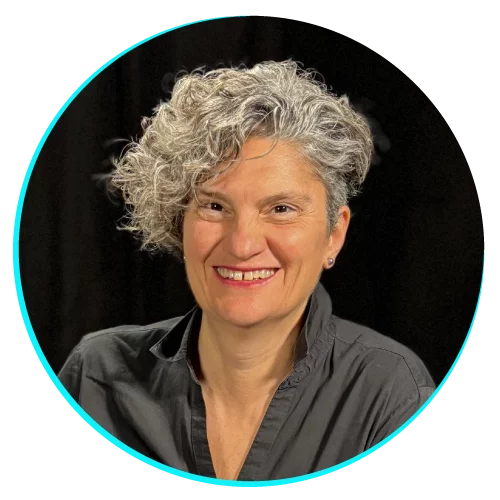
Maria Rentetzi
Friedrich-Alexander-Universität Erlangen-Nürnberg (FAU)
Maria Rentetzi
Maria Rentetzi is Chair of Science, Technology and Gender Studies and Internationalisation Officer at Friedrich-Alexander-Universität Erlangen-Nürnberg (FAU). Her research spans the history of radioactivity and nuclear science, gender and science, and science diplomacy, and her work has been recognised with a European Research Council (ERC) Consolidator Grant and the Gutenberg-e Prize.
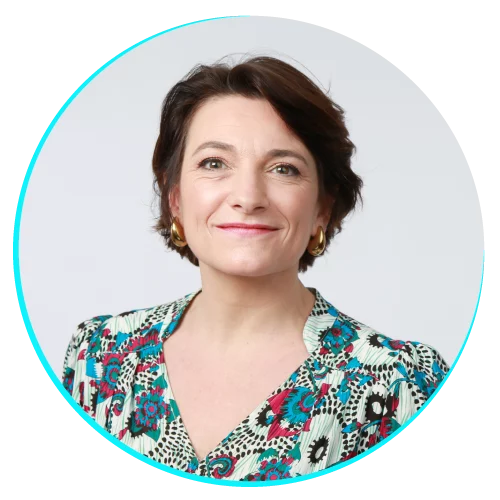
Stéphanie Balme
CERI (Center for International Studies)
Stéphanie Balme
Stéphanie Balme is the Director of CERI (Center for International Studies), a permanent faculty member at Sciences Po Paris, and an Adjunct Professor at Johns Hopkins SAIS. A specialist in international relations, science diplomacy, and China, she has previously served as Dean of the Sciences Po Undergraduate College. She has held research and teaching positions at leading institutions, including the Chinese University of Hong Kong, Tsinghua University, and Columbia University. She has also served as a diplomat in China. She was recently elected a Member of Academia Europaea. Her current research focuses on China as a scientific and technological power, science and technology diplomacy, and EU–China–US relations.

Claire Mays
Symlog / EU Science Diplomacy Alliance
Claire Mays
Claire Mays is an empirical social psychologist and a co-founder of the European Union Science Diplomacy Alliance. Her work lies in facilitating transdisciplinary decision-making, co-research and evaluation in the area of technological risk governance. She was executive director of the H2020 InsSciDE project, leading the design of engagement events and developing its book of case studies. (doi.org/10.5281/zenodo.7397453).

Vytautas Jankauskas
Cabinet of the Minister of Foreign Affairs of Lithuania
Vytautas Jankauskas
Vytautas Jankauska is an Advisor in the Cabinet of the Minister of Foreign Affairs of Lithuania. As a science diplomacy lead, he oversees the inter-institutional process developing Lithuania’s strategic science diplomacy guidelines and coordinates various science diplomacy initiatives at the Ministry. Prior to joining the MFA, he worked in the field of evidence-informed policymaking, with a focus on evaluation. He has over 10 years of experience supporting governments and international organisations in using data, research and evaluation to inform policy decisions, having conducted or co-managed more than 15 evaluations and analytical studies for organisations such as IOM, UNHCR, OSCE, GIZ and ICRC. He holds a PhD in Political Sciences and has led research on evidence-informed decision-making, conducted fieldwork and trainings in eight countries, and authored 10 peer-reviewed publications, including a book published by Oxford University Press.
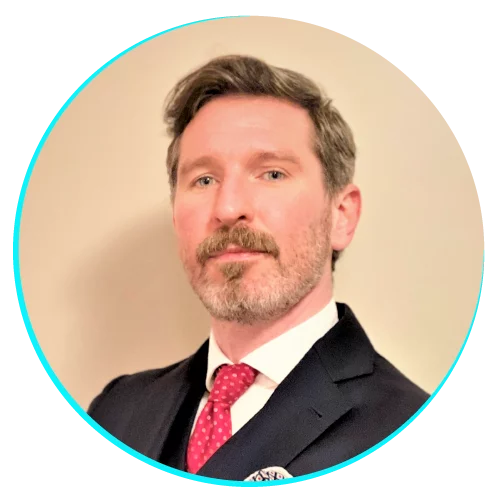
Gianluigi Riva
Bocconi University
Gianluigi Riva
Gianluigi M. Riva is a research fellow (RTDa) at Bocconi University, at the BAFFI Centre on Economics, Finance and Regulation, where he is a principal investigator for the EMA-FRAILTY project under the Transforming Health and Care Systems (THCS) European Partnership. He is a qualified attorney, holding a master’s degree (Juris Doctor) and a research doctorate in Private and EU Law from the University of Pavia and a Marie Curie PhD in Information and Communication from University College Dublin. He was a Fulbright-Shuman visiting scholar at the Massachusetts Institute of Technology (MIT) Media Lab, where he is a Connection Science fellow. He is a non-residential fellow at the Information Society Law Center of the University of Milan and a fellow at the Centro Insubria Studi Politici at Insubria University, the Bocconi Institute for European Policymaking (IEP), and the Centre for Political Studies of the Insubria University. He is Chairman of the COST Action CA24169 - Science in Diplomacy Network: implementing multilateral policymaking in intersectoral, cross-disciplinary & strategic domains (SIDNET).
Pascal Griset
Affiliation
Pascal Griset
Bio to be provided

Anne-Sophie Stevance
International Science Council
Anne-Sophie Stevance
Anne-Sophie Stevance is Policy Director at the International Science Council. She leads the ISC's engagement with the multilateral system and its science diplomacy strategy. She has extensive experience mobilising scientific expertise for decision-making on issues spanning sustainable development and systemic risks, and building global science-policy interface mechanisms.
Pierre-Bruno Ruffini
University of Le Havre
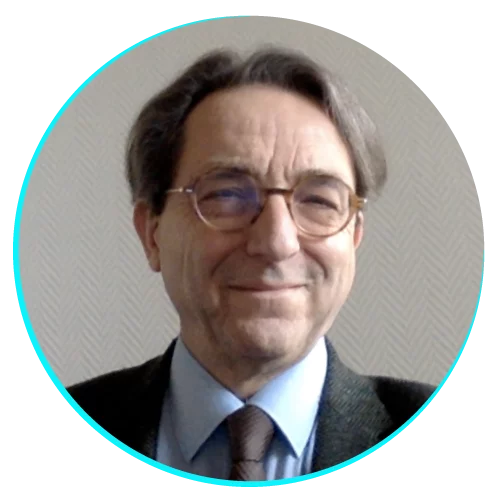
Pierre-Bruno Ruffini
Pierre-Bruno Ruffini is an emeritus professor of international economics, whose research now centres on science diplomacy. He authored many research articles, as well as the first comprehensive volume on this subject (Science and Diplomacy – A New Dimension of International Relations, Springer, 2017). He served as counsellor for science and technology at the French embassies in Russia and Italy. He was an expert in the InsSciDE project and co-chaired the European Union Science Diplomacy Alliance.
Jean-Christophe Mauduit
University College London
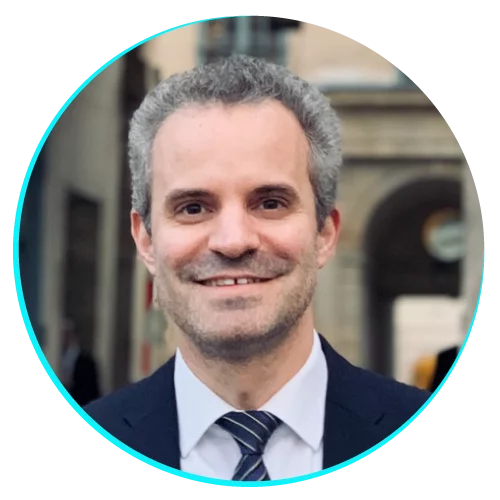
Jean-Christophe Mauduit
Jean-Christophe Mauduit is an Associate Professor of Science Diplomacy at University College London (UCL), in the Department of Science, Technology, Engineering and Public Policy. Before joining UCL, he was a Visiting Scholar at the American Association for the Advancement of Science and Associate Director at the Science Diplomacy Center at the Fletcher School (Tufts University), and earlier worked as an astrophysicist on missions for the European Space Agency and NASA. He co-chaired the EU Science Diplomacy Working Group on capacity building and currently co-chairs the International Science Council's Expert Group on science diplomacy. He holds a PhD in Astrophysics and an MA in Law and Diplomacy.
OBSERVER
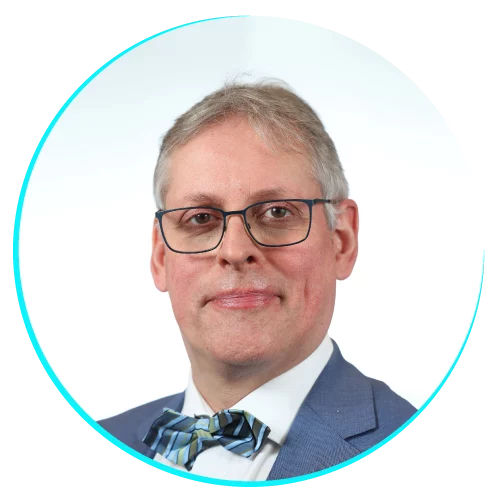
Jan Marco Müller
European Commission
Jan Marco Müller is the Team Leader for Global Approach, Multilateral Dialogue and Science Diplomacy at the European Commission’s DG Research and Innovation.
He has previously served as Science and Technology Adviser in the Policy Planning and Strategic Foresight Division of the European External Action Service (EEAS) as Coordinator for Science to Policy and Science Diplomacy at the International Institute for Applied Systems Analysis (IIASA), and as Assistant to the Chief Scientific Adviser to the President of the European Commission. A geographer by training, he co-edited the 2025 report on a European Framework for Science Diplomacy and led the development of the Council recommendation on a European Union framework for science diplomacy.